
.svg)
One device.Four things people put it on.
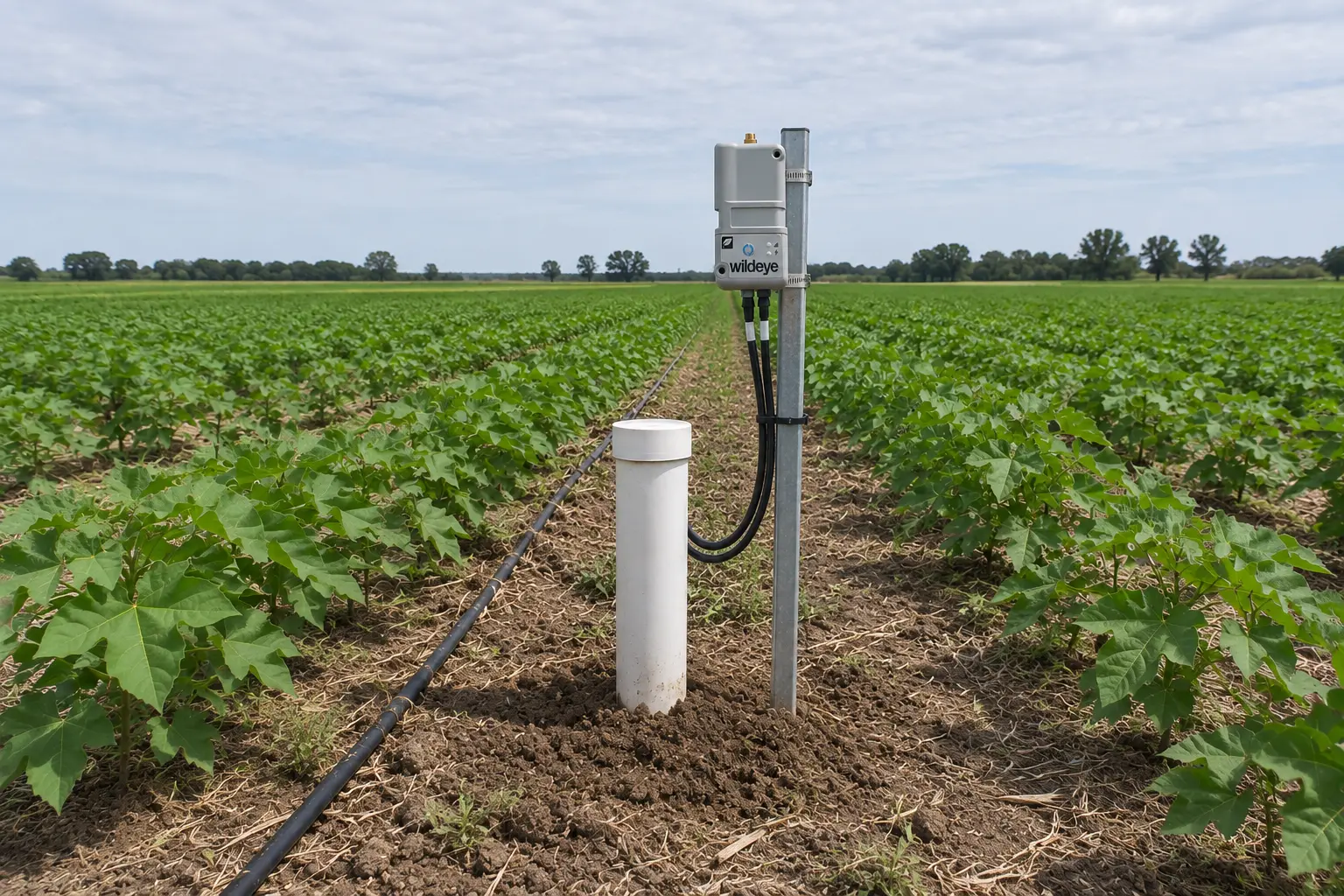
Soil moistureHow much water is actually in your soil?
Every package includes the Wildeye 4G logger, solar or battery power, and an outdoor antenna. No gateways, repeaters or local servers.
See it in agriculturePackagesProbes or tension sensors, depending on the crop.
Profile probe
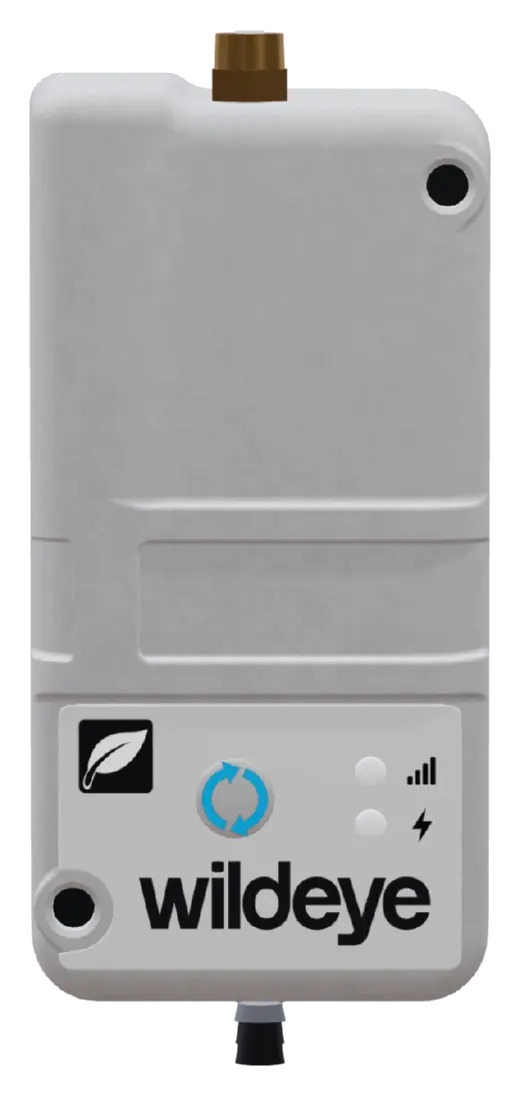

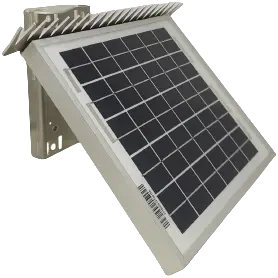
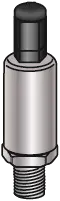

 AntennaWildeye loggerSolar panelProfile probeExpanderPressure sensor
Assembly diagram: a Wildeye logger with an antenna and a solar panel, port 1 running through an M12 coupling and a service loop to a multi-level profile probe, and port 2 running through a coupling to an expander and on to a pressure transducer. - Single-level probe reading at 10 cm (4 in), or a multi-level probe in 40, 80, 120 and 160 cm lengths, reading every depth down the profile
- Moisture and temperature as standard, electrical conductivity optional
- Sentek, EnviroPro and Hydroscout probes supported
- Drip-line pressure sensor logs irrigation time-of-use and catches faults in the line, on a 2 m extendable lead
- Every part arrives with its own lead — M12 screw couplings
Tensiometers
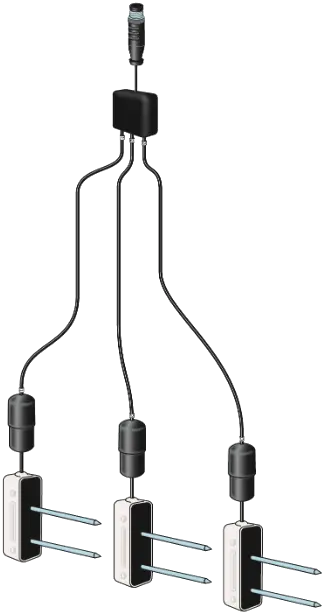 AntennaWildeye loggerSolar panelWatermark tension sensors
Assembly diagram: a Wildeye logger with an antenna and a solar panel, one port running through an M12 coupling to a 3-way adapter, and three Watermark soil tension sensors on its three leads. - Reads up to three Watermark tension sensors from one device
- Watermark interface adapter with Scotchlok connectors in the box
- Every part arrives with its own lead — M12 screw couplings
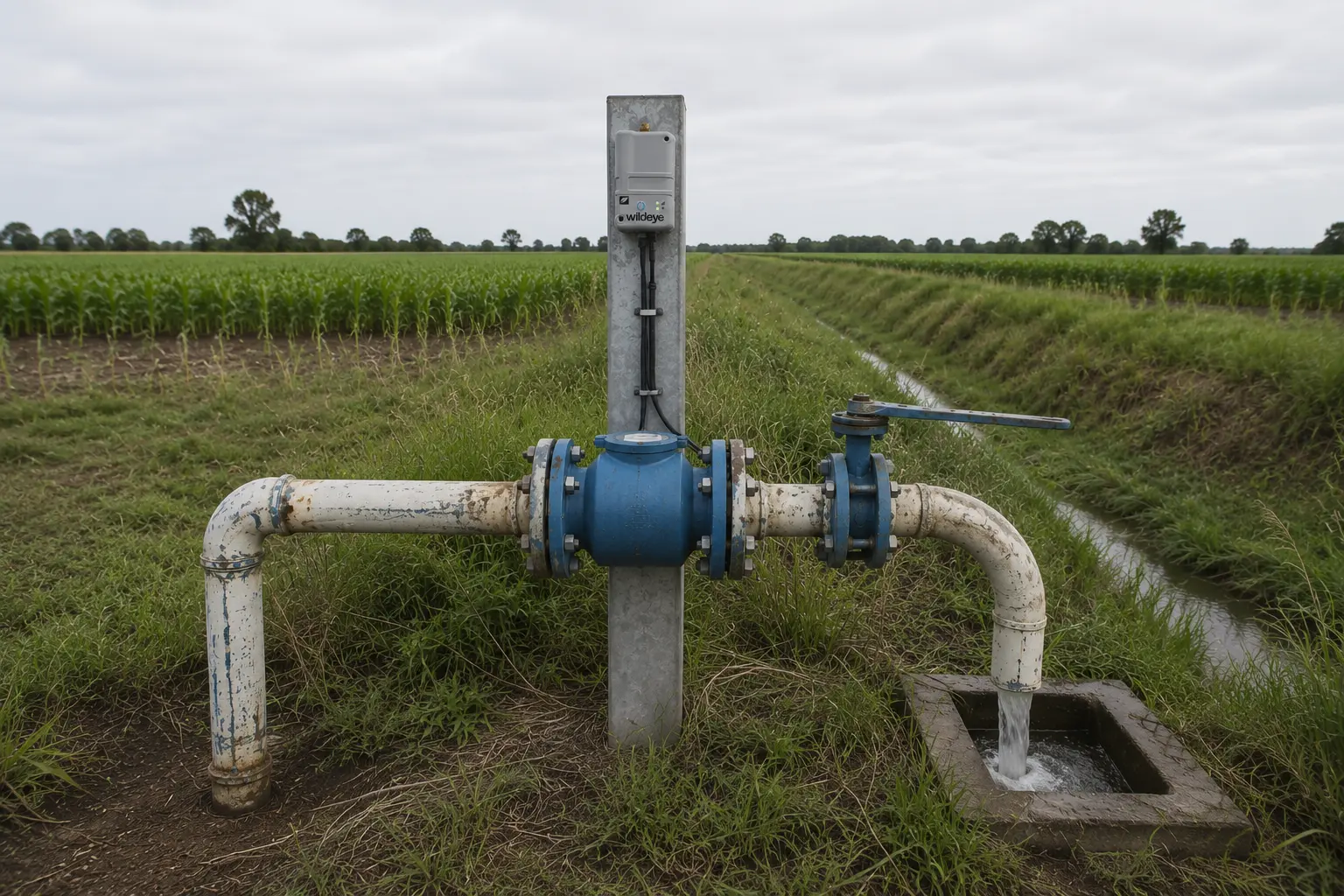
Flow monitoringHow much water are you putting on each field?
Every package includes the Wildeye 4G logger, solar or battery power, and an outdoor antenna. No gateways, repeaters or local servers.
See it in irrigation districtsPackagesPick the kit that fits your meter.
Standard flow metering
AntennaWildeye loggerSolar panelYour meterAssembly diagram: a Wildeye logger with an antenna and a solar panel, one port running through an M12 coupling and a service loop to a pulse output on the meter you already own. - Works with pulse, Modbus (RS485/RS232) and 4-20 mA meter outputs
- Pre-configured for Siemens Mag8000 and Aquamonix I300/I500
- Alerts and reports on delivered volume and flow rate
- Every part arrives with its own lead — M12 screw couplings
Dirty-water flow
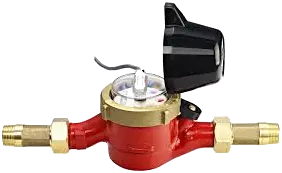 AntennaWildeye loggerSolar panelYour meterReed switch
Assembly diagram: a Wildeye logger with an antenna and a solar panel, one port running through an M12 coupling to a reed switch strapped to the register of the mechanical meter you already own. - Reed-switch interface with a Wildeye plug for a mechanical meter
- Meter sizes 50–150 mm (meter supplied separately)
- Every part arrives with its own lead — M12 screw couplings
Open-channel weir
 AntennaWildeye loggerSolar panelRadar sensor
Assembly diagram: a Wildeye logger with an antenna and a solar panel, and one port running through an M12 coupling to a non-contact radar level sensor. - Non-contact radar level sensor, ±5 mm, reading the stage upstream of the weir
- Flow computed automatically from the stored weir rating table
- Every part arrives with its own lead — M12 screw couplings
Water pressure
AntennaWildeye loggerSolar panelPressure sensorAssembly diagram: a Wildeye logger with an antenna and a solar panel, and one port running through an M12 coupling and a service loop to a stainless pressure transducer. - Stainless pressure transducer, 0–200 psi, ¼-inch NPT fitting
- Pairs with a flow meter at the pump for automatic per-set volumes
- Every part arrives with its own lead — M12 screw couplings
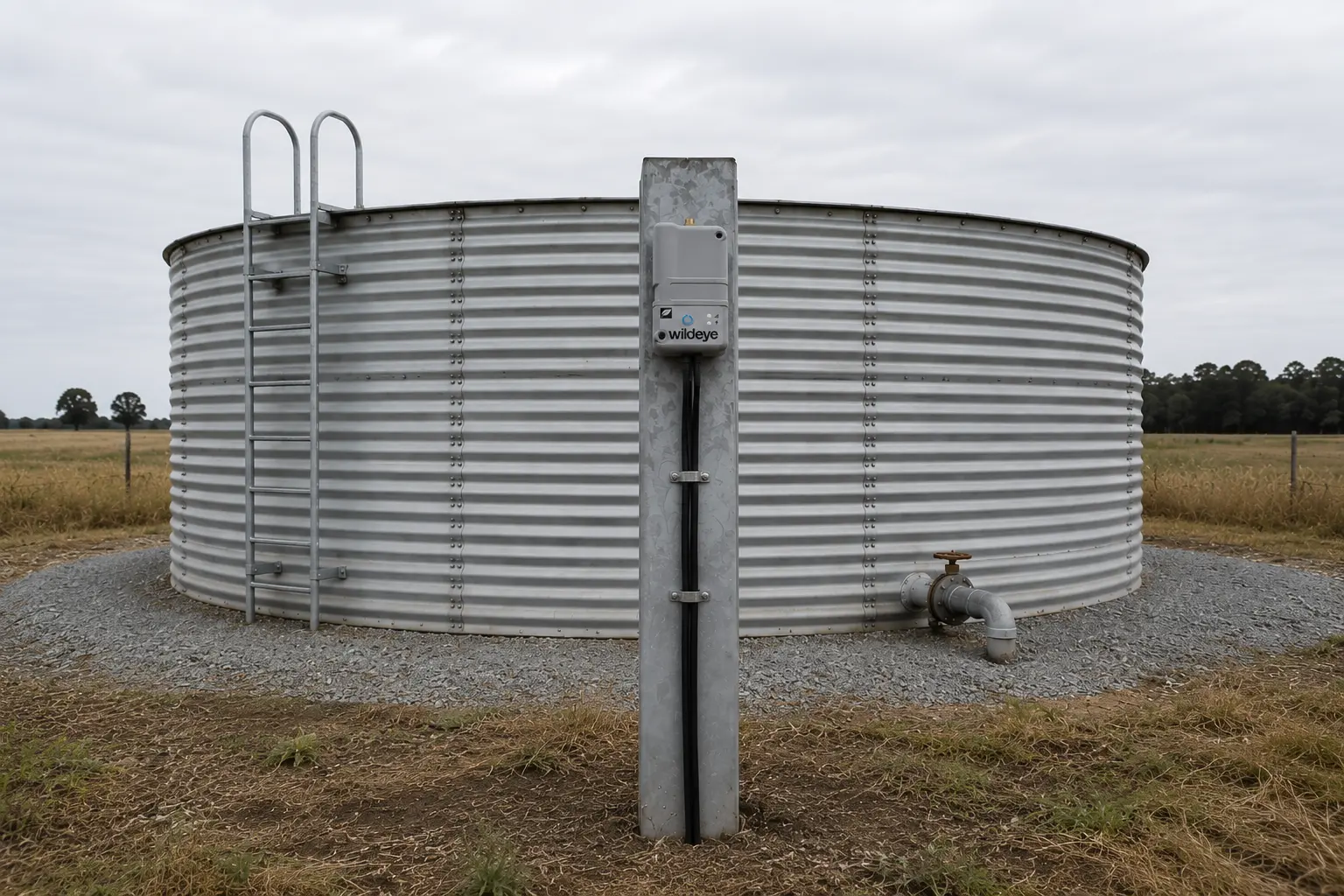
Water levelsWill it run out before you get there?
Every package includes the Wildeye 4G logger, solar or battery power, and an outdoor antenna. No gateways, repeaters or local servers.
See it in water utilitiesPackagesTanks, dams and anything you cannot put a sensor in.
EasyLevel tank
 AntennaWildeye loggerSolar panelSubmersible sensor
Assembly diagram: a Wildeye logger with an antenna and a solar panel, and one port running through an M12 coupling and a service loop to a stainless submersible level sensor. - Non-vented submersible sensor in 5 m or 10 m models, no vent box to maintain
- Stainless body, and it keeps logging when the signal drops
- Every part arrives with its own lead — M12 screw couplings
Reservoir & pond
 AntennaWildeye loggerSolar panelDepth gauge
Assembly diagram: a Wildeye logger with an antenna and a solar panel, and one port running through an M12 coupling and a service loop to a stainless depth gauge. - Stainless submersible depth gauge, 0–5 m or 0–10 m standard, custom depths on request
- Installs in a slotted PVC tube at the lowest point of the storage
- Every part arrives with its own lead — M12 screw couplings
Non-contact radar
AntennaWildeye loggerSolar panelRadar sensorAssembly diagram: a Wildeye logger with an antenna and a solar panel, and one port running through an M12 coupling to a non-contact radar level sensor. - Non-contact radar sensor with 8 m range
- Rated −40 °C to +60 °C for permanent outdoor duty
- Every part arrives with its own lead — M12 screw couplings
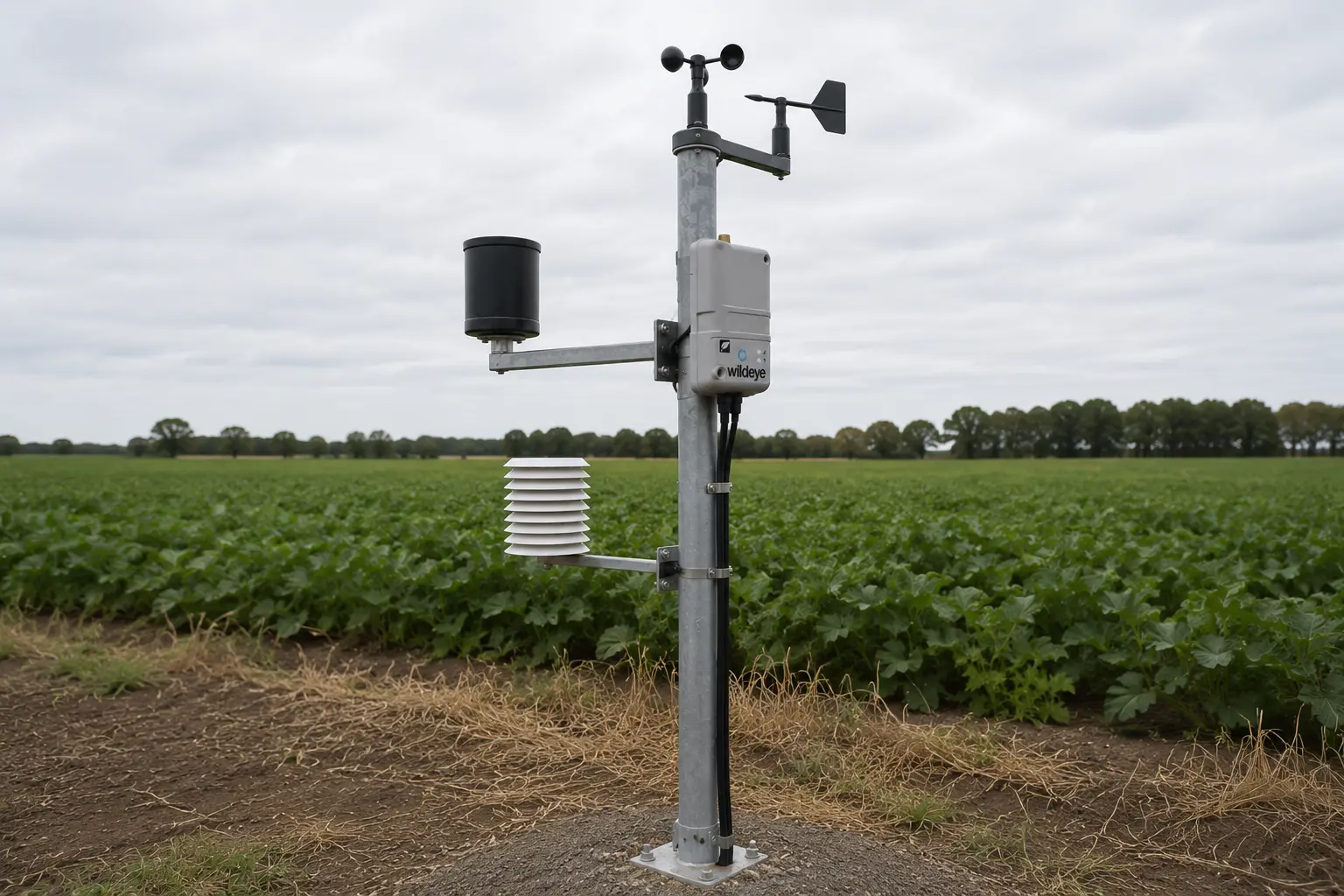
Weather & climateWhat is the weather doing where the crop actually is?
Every package includes the Wildeye 4G logger, solar or battery power, and an outdoor antenna. No gateways, repeaters or local servers.
See it in agriculturePackagesThe full mast, or just the rain gauge.
Standard weather station
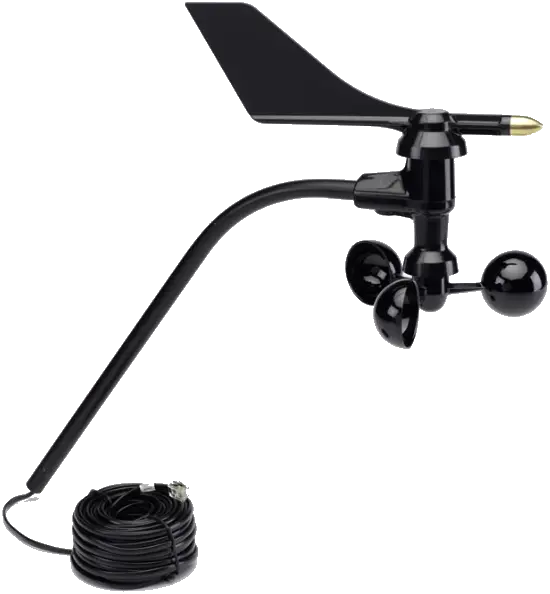
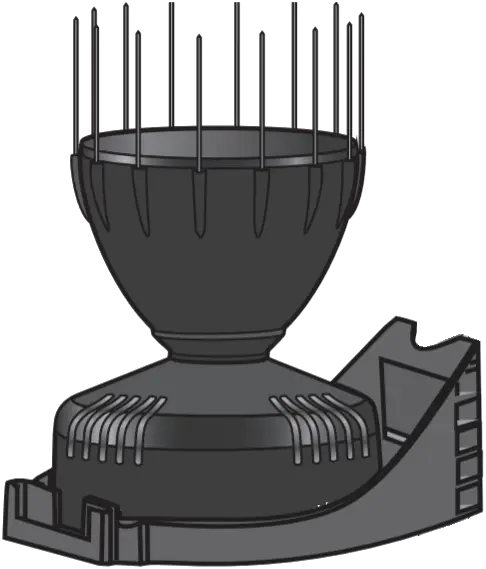
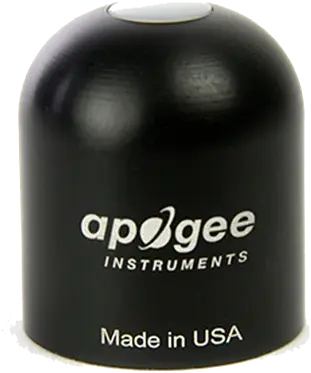
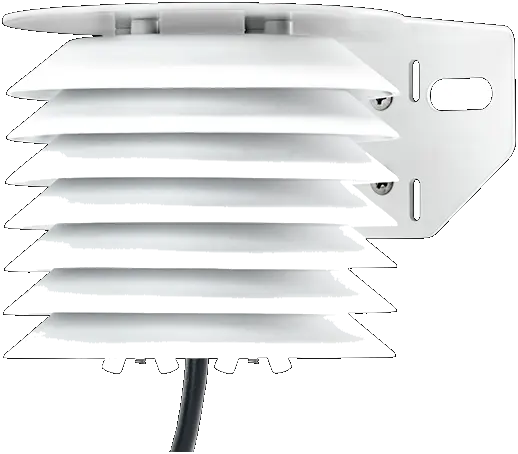 AntennaWildeye loggerSolar panelWind & directionSolar radiationTemp & humidityRain gaugeInterface box
Assembly diagram: a Wildeye logger with an antenna and a solar panel, one port running through an M12 coupling to an interface box, and four instruments on its leads — an anemometer and wind vane, a pyranometer, a louvred temperature and humidity shield, and a tipping-bucket rain gauge. - Rain, wind speed & direction, temperature & humidity, solar radiation
- Agronomic indices computed for you: ET₀, Delta-T, fire danger, chill portions and growing degree days
- 5-minute uploads through the growing season
- Every part arrives with its own lead — M12 screw couplings
Rain gauge
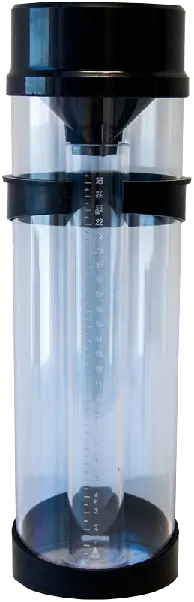 AntennaWildeye loggerSolar panelTipping bucketManual gauge — no wiring
Assembly diagram: a Wildeye logger with an antenna and a solar panel, one port running through an M12 coupling to a tipping-bucket rain gauge, and a manual backup gauge that carries no cable at all. - Commercial tipping-bucket gauge, 0.2 mm resolution every 15 minutes
- Manual backup gauge with QR-code entry through the phone app
- Every part arrives with its own lead — M12 screw couplings